
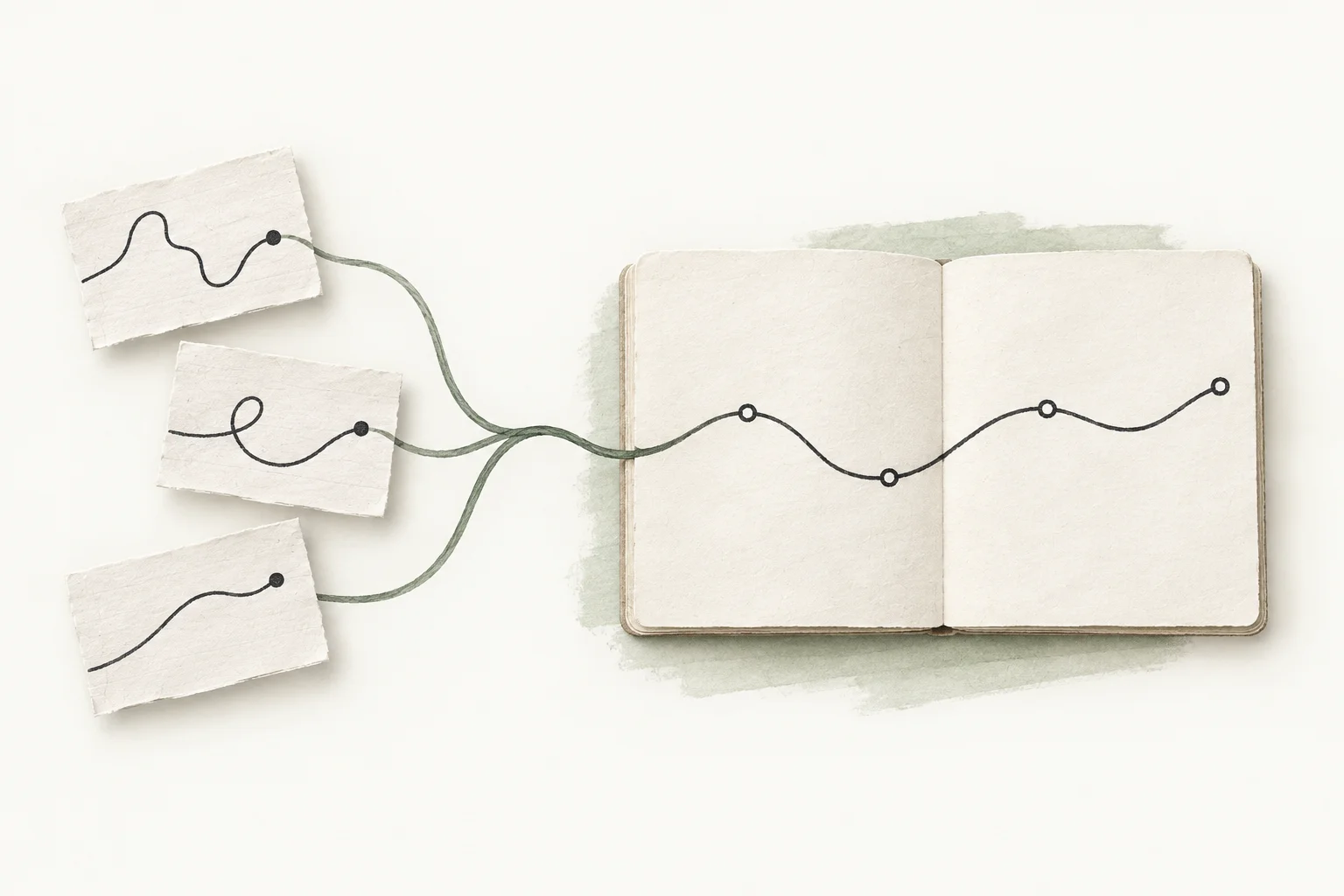
01 / What changed
Something quiet changed.
Writing software used to take enough effort that a change usually came with a conversation. Someone explained the problem. Someone asked why. The work left a trail of decisions along the way.
Now a builder, a product manager, or a founder can turn an idea into working code with a prompt. We love that possibility. We use it ourselves.
But speed changes the way a team stays together. One person acts on a customer conversation. Another works from last week’s plan. An agent builds from a document that no longer reflects the decision.
The work moves forward. The team’s understanding can quietly split.
02 / The cost of losing the thread
The expensive part is finding each other again.
We’ve felt this across teams: intent spread over documents, repository notes, and chat. Everyone has a piece of the answer. Finding what the team actually agreed means asking around, retracing conversations, and hoping nothing was missed.
AI made regenerating code cheap. It did not make regenerating shared understanding cheap.
What did we promise? Which constraint still applies? Was that suggestion accepted, or just explored? By the time those questions surface, the code may already be built around different answers.
We want those differences to become visible while they are still a conversation—before they become a rebuild.
03 / One accepted direction
A record of what we agreed. And why.
We’re building Unbranch around a shared product record: the direction, decisions, constraints, and evidence that explain what the team has accepted as its product today.
A spark, meeting notes, customer feedback, a follow-up, or a recurring frustration can start a proposal. The proposal makes the change clear. The people it affects can consider it against existing decisions and raise objections before it becomes a commitment.
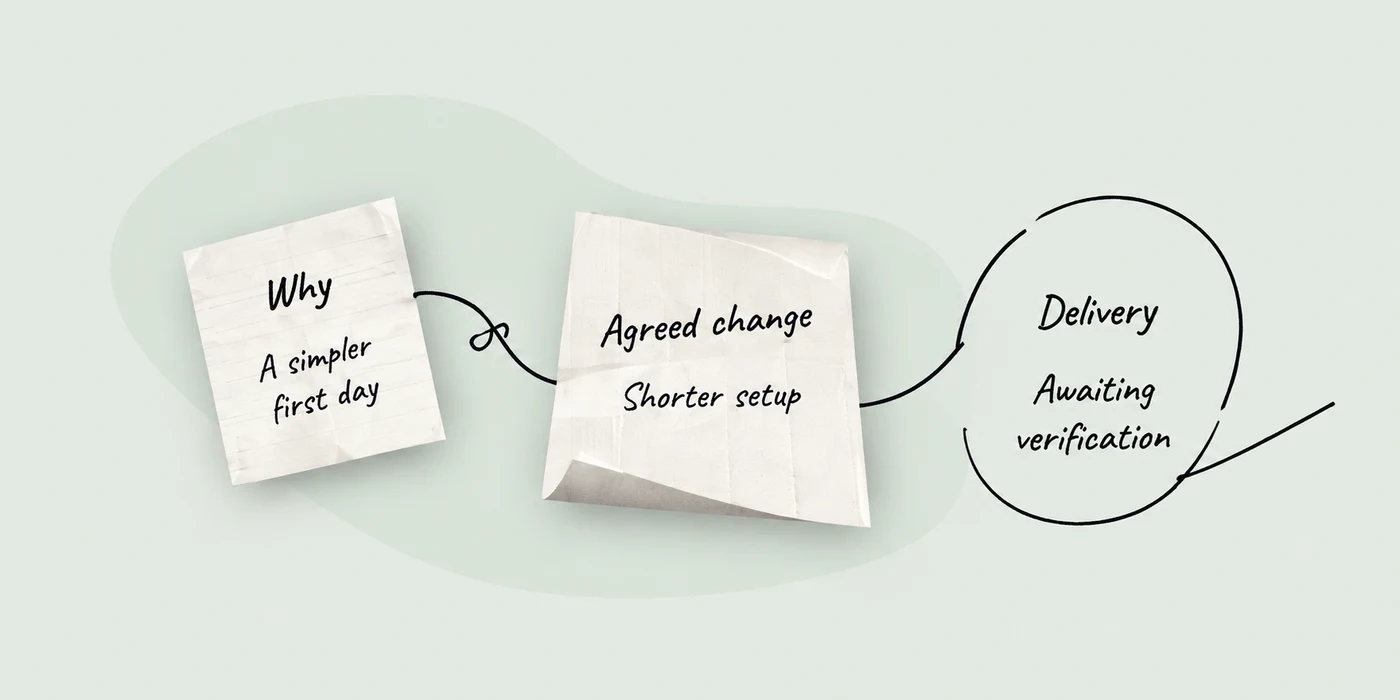
Agreement and delivery stay distinct. A commitment says what the team intends to do. Verification records what actually shipped. That distinction keeps the product record honest.
Builders and agents need context they can act on. Product managers need to see what a change touches. Founders and business owners need to understand the decision without opening a repository. They should all be able to start from the same answer.
04 / What we believe
More clarity.
Less chasing.
Agents get hands, not a vote.
Agents can help draft, analyse, and prepare. People decide what to accept, resolve objections, and verify delivery. The responsibility stays clear.
The pause should earn its place.
Teams already spend time coordinating. Our aim is to replace scattered checking and repeated explanations with a focused review of what changed, by the people it affects. The level of review should fit the risk.
Good decisions belong in the work.
The tools for coding, planning, and running agents are getting better. Unbranch is being built to give that work a durable starting point: what the team has agreed, with the reasoning still attached.
05 / Ideas that shaped ours
Built from experience.
Informed by good work.
Our experience led us here. Reading how others approach intent and decisions has helped us articulate the problem. Two ideas have stayed with us.
Anthropic / Intent that travels
Anthropic’s AI-Native SDLC playbook connects development stages through versioned artifacts, starting with intent that both a person and an agent can read. Human judgment remains part of the process.
For us, that raises a continuing question: how does each new intent relate to what the team has already agreed?
Read the AI-Native SDLC playbook ↗Palantir / Decisions with context
Palantir describes its Ontology as a model connecting data, logic, and action around decisions. That emphasis on the reasoning and action around information resonates with us.
We’re applying that instinct to the product a team is building: keep the decision, its rationale, and what follows connected.
Read Why create an Ontology? ↗